
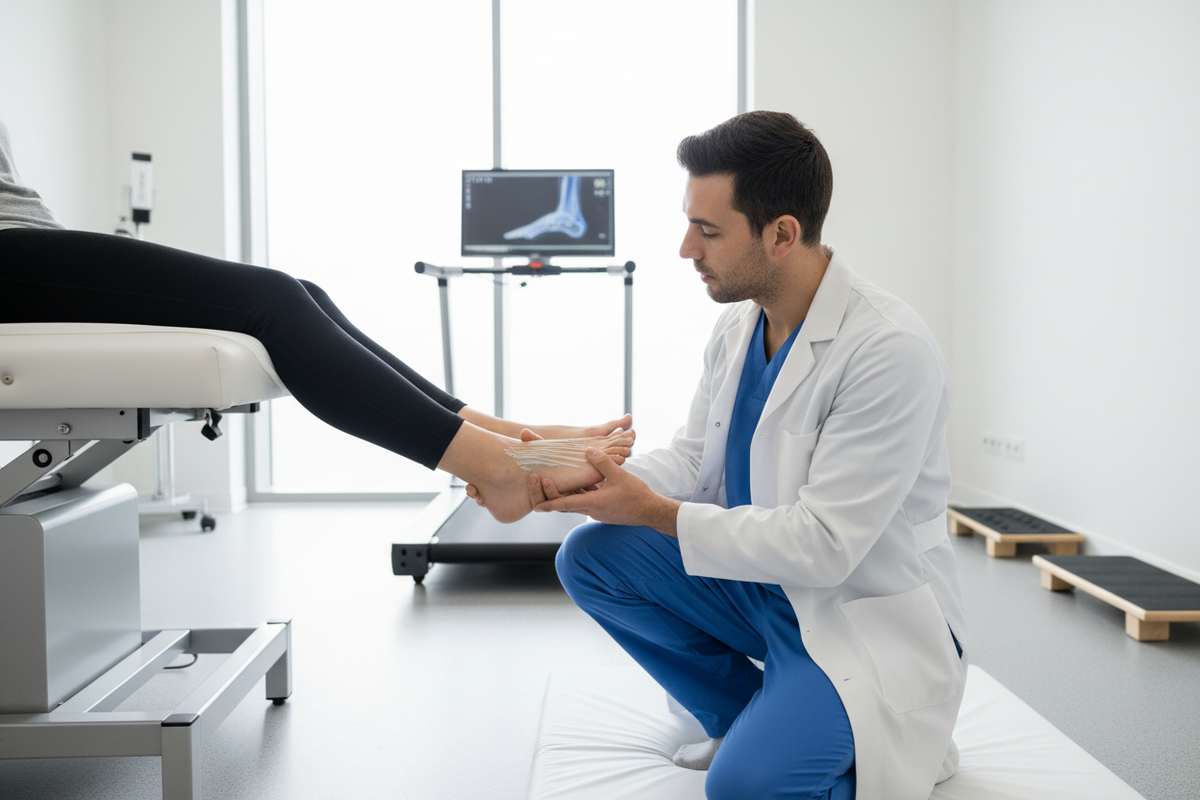
For decades, rehabilitation has focused on strengthening muscles, improving mobility, and correcting movement patterns. While these approaches remain essential, advances in neuroscience have revealed another critical piece of the puzzle: the nervous system.
At Naboso, we believe that effective rehabilitation begins by optimizing the body's sensory system. This concept—what we call barefoot science—recognizes that the feet are far more than mechanical structures. They are sensory organs that provide the brain with continuous information about balance, posture, and movement.
By improving the quality of sensory input from the feet, clinicians can enhance motor output throughout the entire body.
The Foot: Your Brain's Connection to the Ground
Every step you take activates thousands of mechanoreceptors located in the skin, muscles, joints, and fascia of the foot. These receptors constantly communicate with the brain, helping it answer three essential questions:
-
Where am I?
-
How am I moving?
-
How should I prepare for the next movement?
This sensory information forms the foundation of proprioception—the body's awareness of position and movement. When this communication is optimized, movement becomes more efficient, balance improves, and stability becomes automatic rather than reactive.
Corrective Exercise Begins with the Nervous System
Traditional rehabilitation often focuses on strengthening weak muscles or stretching tight tissues. While these interventions have value, they address the result rather than the source.
Movement quality is ultimately determined by the nervous system.
When the brain receives clearer sensory information from the feet, it can organize more efficient movement strategies throughout the kinetic chain. This is why sensory stimulation should be considered an integral component of corrective exercise—not simply an addition to strengthening programs.
Rather than asking muscles to work harder, barefoot science helps the nervous system work smarter.
From Reactive to Proactive Movement
One of the primary goals of rehabilitation is improving movement before injury occurs.
The nervous system relies on two primary movement strategies:
-
Reactive control, where the body responds after movement has already begun.
-
Feed-forward control, where muscles activate before movement occurs to provide stability.
The sensory receptors on the plantar surface of the foot play a critical role in this anticipatory activation.
When these receptors receive meaningful stimulation, they help prepare the body for movement before the first step is taken. This pre-activation supports dynamic stability, efficient force transfer, and injury prevention.
The Short Foot Exercise: More Than Arch Strength
One of the most researched foot exercises in rehabilitation is the Short Foot exercise, originally described by Dr. Vladimir Janda.
Although often viewed as an arch-strengthening exercise, its benefits extend well beyond the intrinsic foot muscles.
When performed correctly, the Short Foot exercise activates the abductor hallucis, improves foot stability, enhances proprioception, and encourages better neuromuscular control.
The objective isn't simply creating a higher arch.
The objective is restoring communication between the foot and the brain.
Sensory Stimulation and Balance
Balance depends on the integration of information from three primary systems:
-
Vision
-
Vestibular function
-
Somatosensory input
The feet represent one of the largest sources of somatosensory information entering the nervous system.
When plantar sensation declines—as can occur with aging, neuropathy, injury, or prolonged footwear use—the brain loses valuable information needed for postural control.
Incorporating textured surfaces, varied sensory input, and barefoot training can help increase sensory awareness and improve balance, particularly in individuals with:
-
Functional ankle instability
-
Peripheral neuropathy
-
Older adults with balance deficits
-
Athletes returning from lower-extremity injury
Building Stability from the Ground Up
One of the most fascinating aspects of barefoot science is how quickly sensory input from the feet influences the rest of the body.
Improved sensory awareness at the foot contributes to reflexive activation throughout the kinetic chain, including:
-
The intrinsic foot muscles
-
The pelvic floor
-
Deep hip stabilizers
-
The core musculature
This relationship reinforces an important rehabilitation principle:
Proximal stability allows distal mobility.
By improving sensory input at the foot, clinicians create the conditions for more efficient stabilization throughout the body, allowing movement to become smoother, stronger, and more coordinated.
Applications Across Rehabilitation
A sensory-based rehabilitation approach can complement traditional treatment strategies for a wide range of conditions, including:
-
Plantar fasciosis
-
Functional ankle instability
-
Peripheral neuropathy
-
SI joint dysfunction
-
Hip labral injuries
-
ACL rehabilitation
-
Balance impairments
-
Gait dysfunction
Rather than replacing strength or mobility training, barefoot science enhances these interventions by improving the nervous system's ability to coordinate movement.
The Future of Rehabilitation Is Sensory
As our understanding of neuroscience continues to evolve, rehabilitation is shifting beyond muscles and joints toward optimizing the communication between the body and the brain.
Every movement begins with sensory input.
By restoring that input through the feet, clinicians can improve movement quality, enhance stability, reduce injury risk, and help patients move with greater confidence.
At Naboso, we believe the future of rehabilitation isn't simply stronger muscles—it's a smarter nervous system.
Because better movement starts with better sensation.


Leave a comment
This site is protected by hCaptcha and the hCaptcha Privacy Policy and Terms of Service apply.