
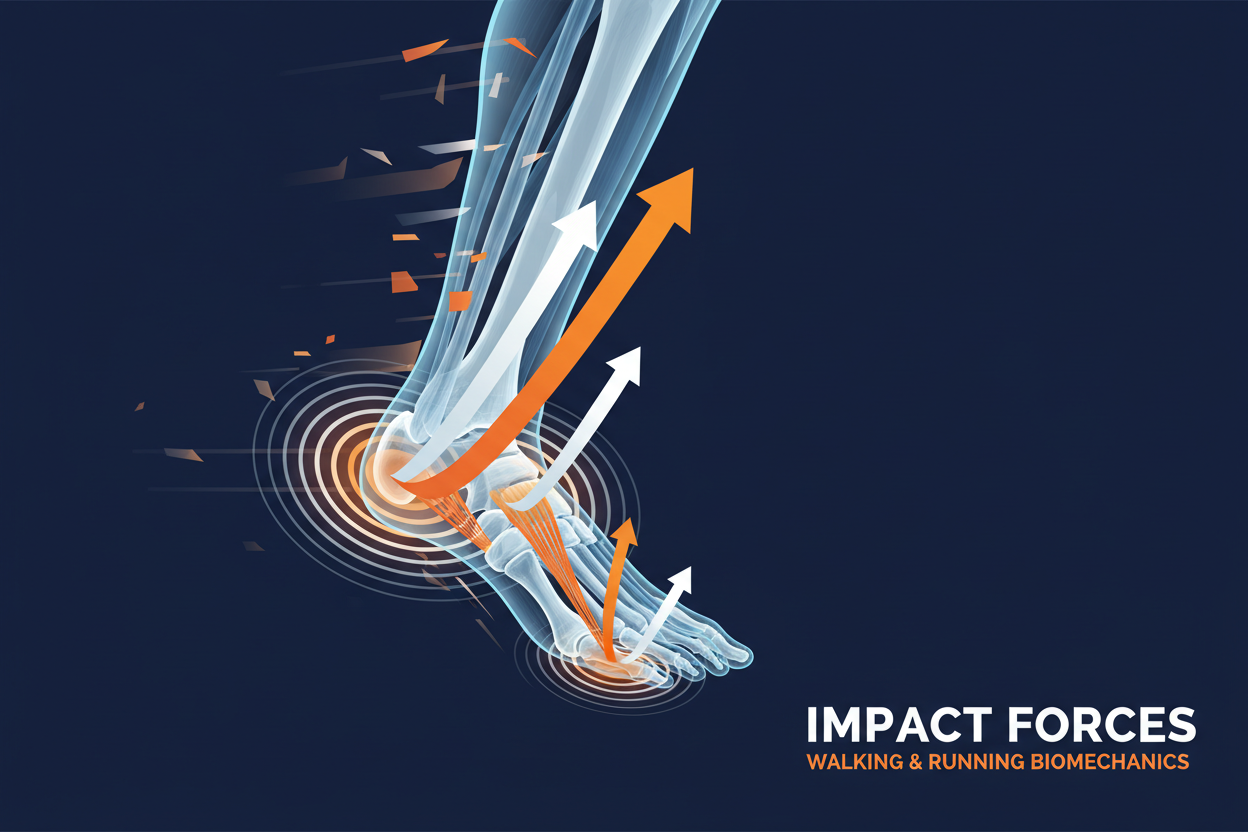
For decades we've been told that the key to preventing running injuries is simple: reduce impact. Softer shoes. More cushioning. More shock absorption.
But what if we've been asking the wrong question?
As both a podiatrist and movement specialist, I've spent years studying how the body responds to the ground beneath us. What I've learned is that our goal shouldn't be to eliminate impact—it should be to better perceive it.
Your Body Doesn't Feel Force. It Feels Vibration.
Every time your foot contacts the ground, an impact force travels through your body. But your nervous system doesn't directly measure force. Instead, it detects the vibration signature created by that impact.
Specialized sensory receptors in the skin called Pacinian corpuscles are incredibly sensitive to high-frequency vibration, particularly in the 15–20 Hz range. These receptors provide the brain with rapid information about the surface beneath you, helping your nervous system prepare for the next step.
This is why sensory input from the feet is so important.
When we surround the foot with thick layers of cushioning, we don't simply soften the landing—we also alter the quality of the information reaching the brain. The result isn't necessarily better movement. In many cases, it's less accurate movement.
The Body Tunes Muscles Before You Land
One of the most fascinating concepts in biomechanics is Muscle Tuning Theory, introduced by Dr. Benno Nigg.
The traditional explanation for impact absorption has focused on eccentric muscle contractions—the muscles lengthening as they slow the body down. While eccentric strength is certainly important, it doesn't explain what actually happens during the first milliseconds after foot strike.
Peak impact occurs in approximately 50 milliseconds.
A voluntary reaction takes much longer than that.
Instead, your nervous system predicts ground contact before it happens. Using previous experiences stored within the cerebellum, the brain sends a feed-forward signal that pre-activates muscles before your foot even lands.
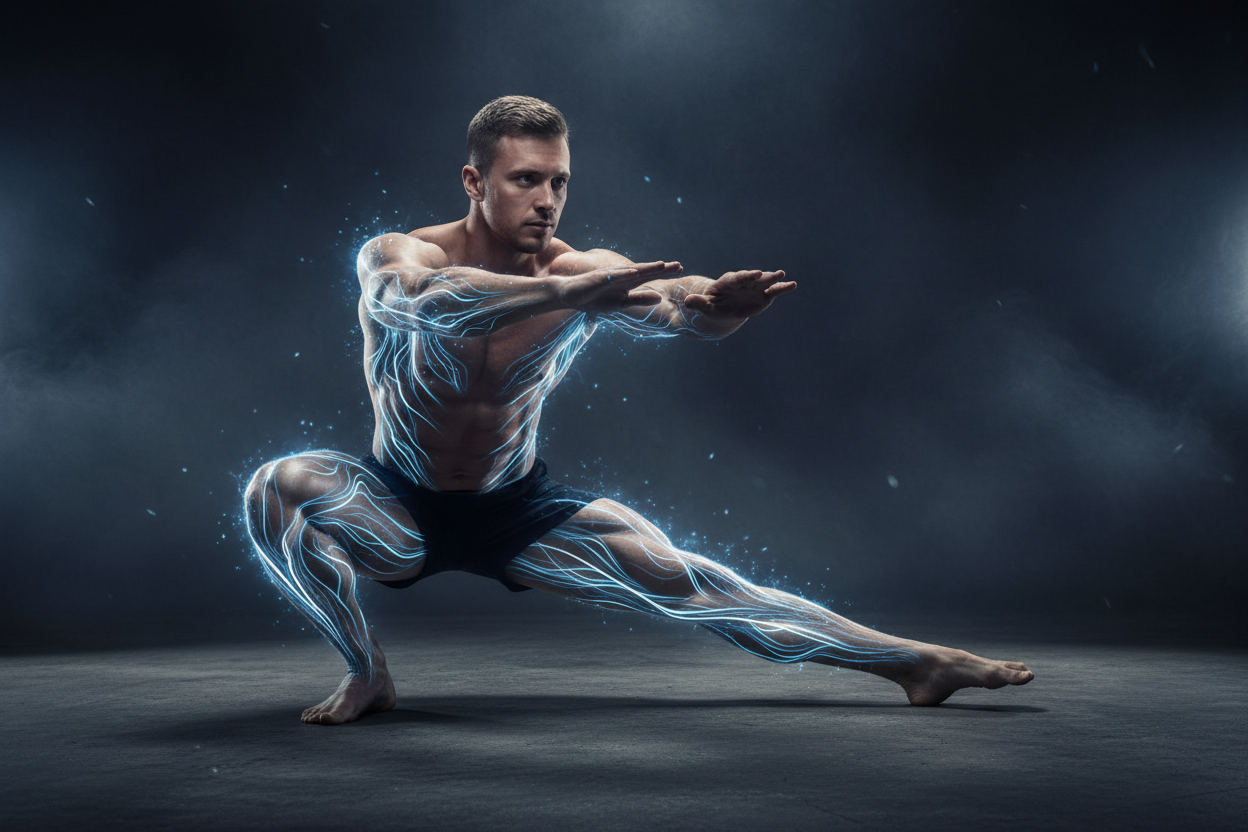
These muscles don't primarily lengthen—they become isometrically active, increasing stiffness just enough to dampen vibration before it travels into tendons, joints, and bone.
This is movement efficiency at its finest.
Your body isn't reacting to impact.
It's preparing for it.
The Human Body Was Designed to Recycle Energy
Think about a kangaroo.
It isn't constantly generating muscular force with every jump. Instead, it stores energy in elastic tissues and releases it with remarkable efficiency.
Humans do the same.
Every running step stores mechanical energy within connective tissues like the plantar fascia and Achilles tendon. That stored energy is then returned during push-off, reducing the amount of muscular work required to move forward.
I often describe this as the body's catapult effect.
Healthy movement isn't about resisting force.
It's about capturing force, storing it, and returning it at precisely the right moment.
The more elastic and resilient your connective tissue system becomes, the more efficiently you move.
Not All Surfaces Speak the Same Language
Every surface creates its own vibration signature.
Grass feels different from dirt.
Wood feels different from concrete.
A running track feels different from asphalt.
Your nervous system learns these signatures over time and adjusts muscle activity accordingly.
Problems arise when we spend too much time moving on environments that provide less variable sensory information. Extremely rigid or highly dampened surfaces can change how the body prepares for impact, reducing the adaptability that helps protect us from injury.
Movement variety isn't just beneficial for muscles and joints.
It's essential for the nervous system.
Building a More Resilient Runner
Rather than trying to eliminate impact, focus on improving your body's ability to interpret and manage it.
A few ways to begin include:
- Spend time barefoot in safe environments to strengthen the intrinsic muscles of the feet while increasing sensory awareness.
- Train on a variety of surfaces so your nervous system learns to adapt to different vibration signatures.
- Prioritize eccentric loading, particularly for the Achilles tendon and calf complex, to maintain the elastic recoil needed for efficient movement.
- Challenge your balance and foot awareness regularly to improve feed-forward control and movement confidence.
These strategies aren't simply about making your feet stronger.
They're about making your brain better at predicting, preparing, and responding to movement.
Movement Begins with Sensation
At Naboso, we often say that movement begins with sensation.
Before the body can move well, it has to accurately perceive the environment around it.
Every step is a conversation between your feet and your brain.
When that conversation becomes clearer, your nervous system can organize movement more efficiently, tune muscles more effectively, and use your body's natural elastic system the way it was designed.
The future of injury prevention isn't about blocking force.
It's about improving perception.
Because when you feel the ground better, you move better.

Leave a comment
This site is protected by hCaptcha and the hCaptcha Privacy Policy and Terms of Service apply.