

Why true performance begins with tension—not movement.
When most people hear the word fascia, they think of foam rollers, massage guns, or releasing tight tissue. But fascia is far more than a tissue that needs to be "released." It is one of the body's most important systems for stability, force transfer, and sensory awareness.
Whether you're an athlete striving for better performance, a rehabilitation professional helping patients recover, or someone looking to move more efficiently throughout life, understanding how to create fascial tension can fundamentally change the way you train.
Fascia: The Body's Organ of Form
Fascia is a continuous connective tissue network that surrounds every muscle, tendon, ligament, nerve, and organ. Rather than viewing muscles as isolated structures, fascia connects the body into one integrated system.
I often describe fascia as the organ of form because it helps determine how we hold ourselves against gravity, stabilize our joints, and transfer force from one part of the body to another.
Without appropriate fascial tension, movement becomes less efficient. Power leaks occur. Stability decreases. Compensation increases.
This is why elite athletes often appear effortless—they aren't simply producing more force. They're transferring force more efficiently through an integrated fascial system.
Your Brain Feels Fascia More Than Muscle
One of the most overlooked facts about fascia is its incredible sensory capacity.
Fascia contains significantly more sensory receptors than muscle tissue, making it one of the body's richest sources of proprioceptive information. When you feel your body "engage" during an exercise, you're often sensing changes in fascial tension as much as muscle contraction itself.
This shifts the conversation from simply strengthening muscles to improving the quality of communication between your nervous system and your connective tissues.
Movement quality begins with sensation.
Isometric Training: The Foundation of Fascial Tension
While dynamic movement certainly challenges fascia, one of the most effective ways to intentionally develop fascial tension is through isometric contractions.
Holding a position without movement creates sustained tension throughout the fascial network, particularly within the perimysium—the connective tissue surrounding muscle bundles.
This tissue contains specialized cells called myofibroblasts, which contribute to the regulation of tissue stiffness and tension.
Unlike traditional strength training that often emphasizes movement through range, isometric loading teaches the body how to create internal stability before movement even begins.
Think of it as building the structural integrity that allows movement to become more efficient.
The Four Fascial Tension Zones
Rather than viewing stability as coming from the "core" alone, I teach four primary fascial tension zones that work together to create whole-body integration.
Zone 1: The Foot
Everything begins with the foot.
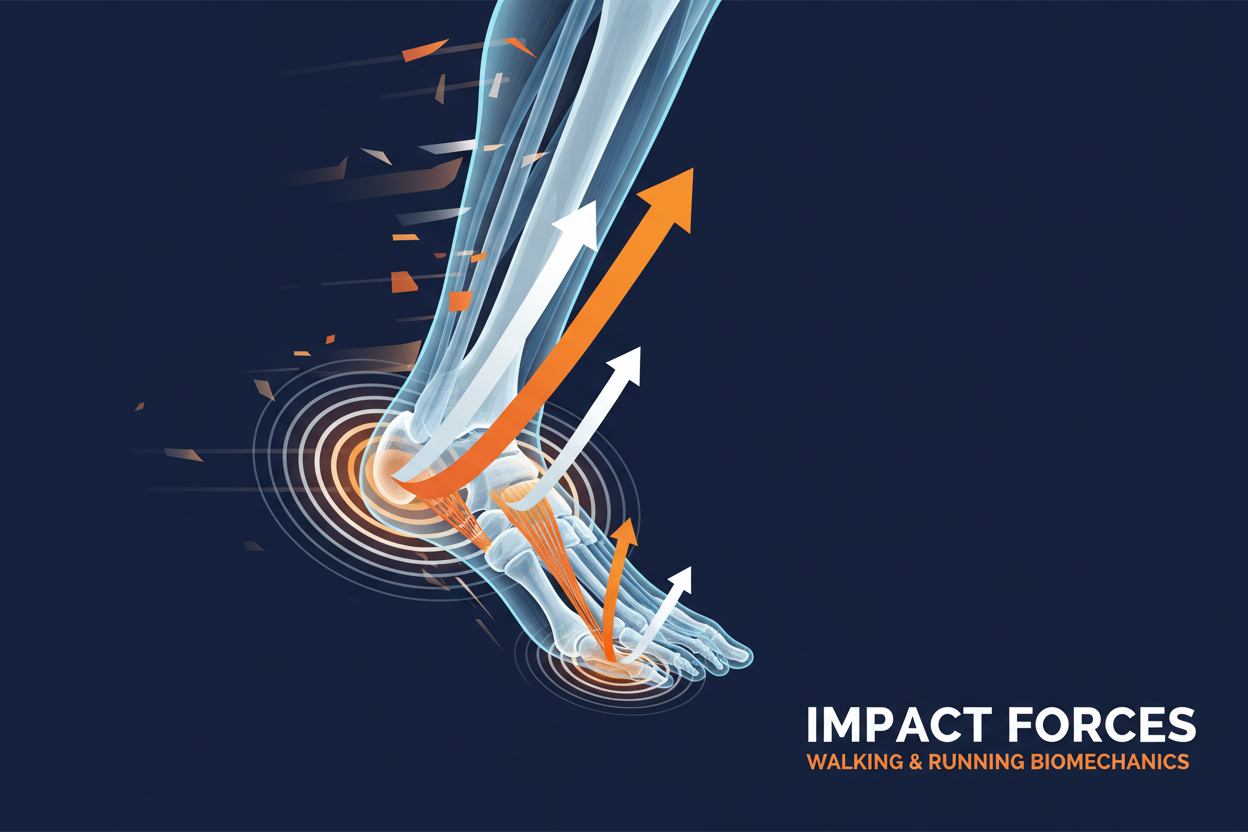
Developing the intrinsic muscles of the foot through exercises such as the Short Foot Exercise establishes a stable sensory foundation. The foot is your first point of contact with the ground, and improving foot stability enhances the body's ability to transmit force upward.
Zone 2: The Deep Core and Pelvic Floor
Once the foot establishes stability, the deep core and pelvic floor create internal pressure and trunk stiffness.
This is not about aggressively bracing the abdominals.
Instead, it's about creating a balanced internal tension that allows efficient force transfer while maintaining natural breathing and movement.
Zone 3: The Shoulder Complex
Upper-body stability depends on creating tension throughout the shoulder girdle.
Proper shoulder positioning, combined with external rotation and scapular control, provides a stable platform for pushing, pulling, pressing, and carrying.
Many common shoulder problems develop because individuals attempt to generate force before establishing shoulder stability.
Zone 4: The Hand
The hands complete the fascial chain.
Learning to actively grip, root the fingers, and create tension through the hands significantly improves shoulder stability and upper-body strength.
Something as simple as gripping the floor during a push-up can immediately change the quality of movement throughout the entire upper extremity.
The Power of Foot-to-Core Sequencing
One of the most powerful concepts in fascial training is that these tension zones are additive.
Each zone builds upon the previous one.
When you create foot stability first, then add pelvic floor engagement, then shoulder positioning, and finally hand tension, the entire body becomes a connected system capable of producing and transferring force much more efficiently.
Rather than relying on isolated muscles, you're utilizing the body's integrated fascial network.
This is why bodyweight movements often become stronger—not because muscles suddenly gained strength, but because force is no longer leaking between body segments.
Why This Matters for Shoulder Health
Many shoulder injuries are not simply shoulder problems.
They are whole-body stability problems.
When the hands fail to create adequate tension, or when shoulder external rotation is poorly controlled, the body often compensates through structures like the biceps tendon or subacromial space.
Learning to root the hands into the ground, actively grip, and organize shoulder positioning before movement can dramatically improve movement quality while reducing unnecessary joint stress.
Rethinking Balance Training
For years, rehabilitation emphasized unstable surface training using wobble boards and balance discs.
While these tools have their place, I believe we've overemphasized instability.
Real stability comes from learning how to create internal fascial tension on a stable surface.
Before challenging balance externally, we must first teach the nervous system how to generate stability internally.
Stable surface isometric loading develops proprioception, joint awareness, and coordinated tension that ultimately transfers more effectively into everyday movement and athletic performance.
From Everyday Movement to Elite Performance
These principles aren't reserved for high-level athletes.
Whether you're standing from a chair, climbing stairs, lifting groceries, practicing yoga, or performing handstands, your ability to create coordinated fascial tension determines how efficiently you move.
For advanced athletes, these concepts become the foundation for pull-ups, ring work, gymnastics, climbing, and complex bodyweight skills.
For everyone else, they simply help you move with greater confidence, stability, and longevity.
The Future of Movement Is Fascial
For decades, movement education has focused primarily on muscles.
But movement doesn't occur because muscles work independently.
Movement emerges from the interaction between the nervous system, fascia, muscles, and the environment.
When we shift our attention from simply creating stronger muscles to developing a more responsive fascial system, we begin to unlock a new level of efficiency, resilience, and movement quality.
Because ultimately, strength isn't just about how much force you can produce.
It's about how efficiently your body can transfer it.


Leave a comment
This site is protected by hCaptcha and the hCaptcha Privacy Policy and Terms of Service apply.