

One of the most common goals I hear from patients, athletes, and movement professionals is:
"I want to move more symmetrically."
At first glance, that sounds like a good thing. After all, symmetry is often associated with balance, efficiency, and optimal movement.
But here's the truth:
Human movement was never designed to be perfectly symmetrical.
In fact, some degree of asymmetry is completely normal—and necessary.
The key is understanding the difference between healthy asymmetry and compensatory asymmetry.
We Are Born Dominant
Long before we develop a dominant hand, we develop a dominant side.
Research suggests that laterality begins in utero and continues throughout development. Just as most people become right- or left-handed, we also develop a preferred foot, preferred leg, and preferred movement strategy.
This means that from the very beginning, the nervous system learns to organize movement around dominant and non-dominant patterns.
As a result, perfect symmetry doesn't exist.
And it shouldn't.
The Role of Limb Dominance
Think about how you naturally move throughout the day.
You likely:
-
Lead with one leg when climbing stairs
-
Balance more comfortably on one foot
-
Kick a ball with one side
-
Generate more power through one limb
Even during bilateral exercises like squats, deadlifts, running, or cycling, the body often relies more heavily on a dominant side.
Studies have shown that many individuals demonstrate up to a 15% difference in power production between limbs.
This isn't necessarily a problem.
The problem occurs when that difference becomes excessive.
The Goldilocks Zone of Movement
I often describe movement symmetry as a "Goldilocks" principle.
Too much asymmetry creates compensation.
Too much forced symmetry can disrupt natural movement patterns.
The goal is to find the sweet spot in between.
When asymmetries become too large, the body begins to compensate through:
-
Altered loading patterns
-
Joint stress
-
Reduced movement efficiency
-
Muscle overuse
-
Increased injury risk
Over time, these compensations can contribute to chronic pain, repetitive strain, and movement dysfunction.
The goal isn't to eliminate asymmetry.
The goal is to manage it.
What Gait Reveals About the Brain
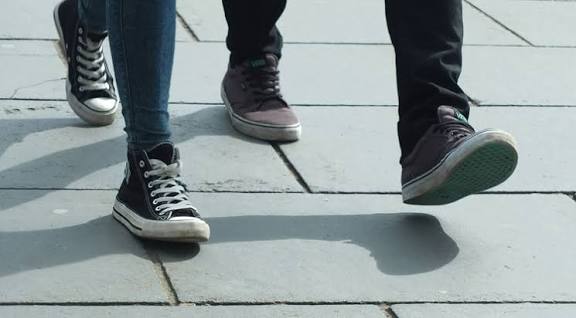
One of the places asymmetry becomes most apparent is in walking.
Gait is one of the most complex movement patterns humans perform. Every step requires coordination between:
-
The nervous system
-
Sensory receptors
-
Muscles
-
Joints
-
Fascia
-
Balance systems
When injuries, pain, neurological conditions, or sensory deficits occur, gait often changes.
You may see:
-
Favoring one side
-
Reduced weight acceptance
-
Altered arm swing
-
Escape gait patterns
-
Steppage gait
-
Compensation through the hips or trunk
What many people don't realize is that these patterns are often driven by perception—not strength.
The brain is simply responding to the information it receives.
Why You Can't "Think" Your Way Into Better Walking
A common mistake people make is trying to consciously correct their gait.
They think:
-
"Walk straighter."
-
"Step more evenly."
-
"Use the other leg more."
The challenge is that walking is largely subconscious.
Your gait is controlled by automatic neural programs that operate below conscious awareness.
This means that trying to consciously override your walking pattern is often ineffective and sometimes makes movement feel even less natural.
Instead, we must change the sensory information the brain receives.
Movement Begins With Perception
This is where sensory stimulation becomes incredibly powerful.
The brain can only move what it can feel.
Every step provides information from the feet to the nervous system through specialized sensory receptors.
These receptors help the brain determine:
-
Where the body is in space
-
How much force is being applied
-
Which muscles should activate
-
How balance should be maintained
When sensory awareness is reduced, movement quality often suffers.
This is why I believe movement begins with perception.
Before we improve movement, we must improve awareness.
Training the Non-Dominant Side
One of the simplest ways to reduce excessive laterality is to intentionally train the non-dominant side.
This doesn't mean forcing symmetry.
Instead, it means challenging the nervous system to expand its movement options.
Strategies include:
-
Single-leg balance training
-
Single-leg strength exercises
-
Non-dominant foot drills
-
Sensory-based balance challenges
-
Coordination exercises
These activities promote neuroplasticity and help improve the brain's ability to coordinate both sides of the body more effectively.
The Role of Sensory Stimulation
At Naboso, our approach to movement is rooted in sensory science.
Rather than forcing movement corrections, we focus on improving the quality of information reaching the brain.
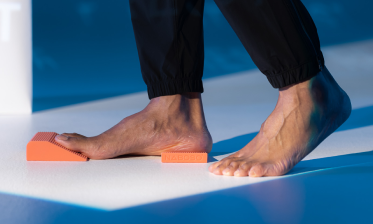
Tools such as:
-
Textured insoles
-
Sensory socks
-
Standing mats
-
Foot stimulation tools
provide texture-based sensory input that increases awareness through the feet.
This additional information helps the nervous system better perceive the body and often allows individuals to self-correct movement patterns more naturally.
When the brain receives better information, it can make better movement decisions.
Final Thoughts
Perfect symmetry is not the goal.
Healthy movement is.
The human body is naturally asymmetrical, and some degree of laterality is part of how we are designed to move. The key is recognizing when asymmetry becomes compensation and addressing the underlying sensory and neurological factors that drive it.
Instead of chasing perfect symmetry, focus on creating better awareness.
Because when we improve sensation, we improve perception.
And when we improve perception, we improve movement.
Movement begins with perception.

Leave a comment
This site is protected by hCaptcha and the hCaptcha Privacy Policy and Terms of Service apply.