
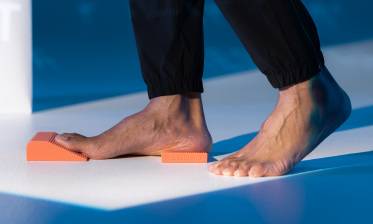
One of the most misunderstood exercises in foot function and movement rehabilitation is the “Short Foot” exercise.
Originally introduced by neurologist and rehabilitation pioneer Dr. Vladimir Janda, Short Foot has become a staple in podiatry, physical therapy, and movement education as a way to strengthen the intrinsic muscles of the foot and improve arch stability.
But over the years, I’ve noticed something important:
Most people are doing it wrong.
Short Foot is not simply about “shortening” the foot.
It is not about aggressively gripping your toes or creating tension through the plantar fascia.
And it is definitely not meant to become a rigid endurance hold.
When performed correctly, Short Foot becomes something much bigger - a sensory-driven stabilization strategy that connects the foot, pelvic floor, diaphragm, tongue and nervous system into one integrated movement system.
The Foot Is More Than a Structure
The human foot contains 26 intrinsic muscles — small stabilizing muscles that originate and insert within the foot itself. These muscles play a critical role in balance, posture, gait efficiency, and movement adaptability.
One of the most important intrinsic muscles involved in Short Foot is the abductor hallucis.
This muscle runs along the inside of the foot and helps:
- Support the medial arch
- Lift the navicular bone
- Improve foot stability
- Reduce excessive pronation
- Slow the progression of bunions
The abductor hallucis is often weak, inhibited, or poorly recruited in modern humans due to:
- Cushioning footwear
- Narrow toe boxes
- Sedentary lifestyles
- Reduced barefoot exposure
- Sensory deprivation of the feet
The result? Feet that lose their ability to stabilize from the ground up.
The Missing Link: Sensory Activation
What makes Short Foot powerful is not just muscular activation — it is sensory activation.
The feet are incredibly rich in mechanoreceptors that feed information into the nervous system. Every step we take provides sensory input that influences:
- Balance
- Posture
- Core activation
- Gait mechanics
- Movement efficiency
- Nervous system regulation
When we perform Short Foot correctly, we are not simply strengthening the arch. We are enhancing the communication between the feet and the brain.
This is why I teach Short Foot as a neurosensory exercise rather than an isolated strengthening drill.
The Integrated Short Foot Approach
Traditional cues often tell people to “pull the ball of the foot toward the heel.”
Unfortunately, this frequently leads to toe gripping, over-recruitment of the plantar fascia, and excessive tension.
Instead, I teach an integrated approach built around the concept of stacked domes.
The body contains three important pressure and stabilization systems:
- The foot arch
- The pelvic floor
- The diaphragm
These systems work together to create stability and pressure regulation throughout the body.
The most effective way to activate Short Foot is to:
- Find a neutral foot and tripod foot
- Gently press the tips of toes into the ground
- Allow the arch to naturally lift
- Exhale during activation
- Connect the breath to a lift of the posterior pelvic floor
This creates a much more functional stabilization pattern that mirrors how the body actually moves in gait and standing.
Why Foot Alignment Matters
Many people struggle with Short Foot because the foot itself is already mechanically compromised.
Conditions such as:
- Bunions
- Hammer toes
- Flat feet
- Toe drift
- Collapsed arches
can reduce the ability of the intrinsic muscles to activate effectively.
This is why alignment matters.
Sometimes the first step is not strengthening — it is repositioning.
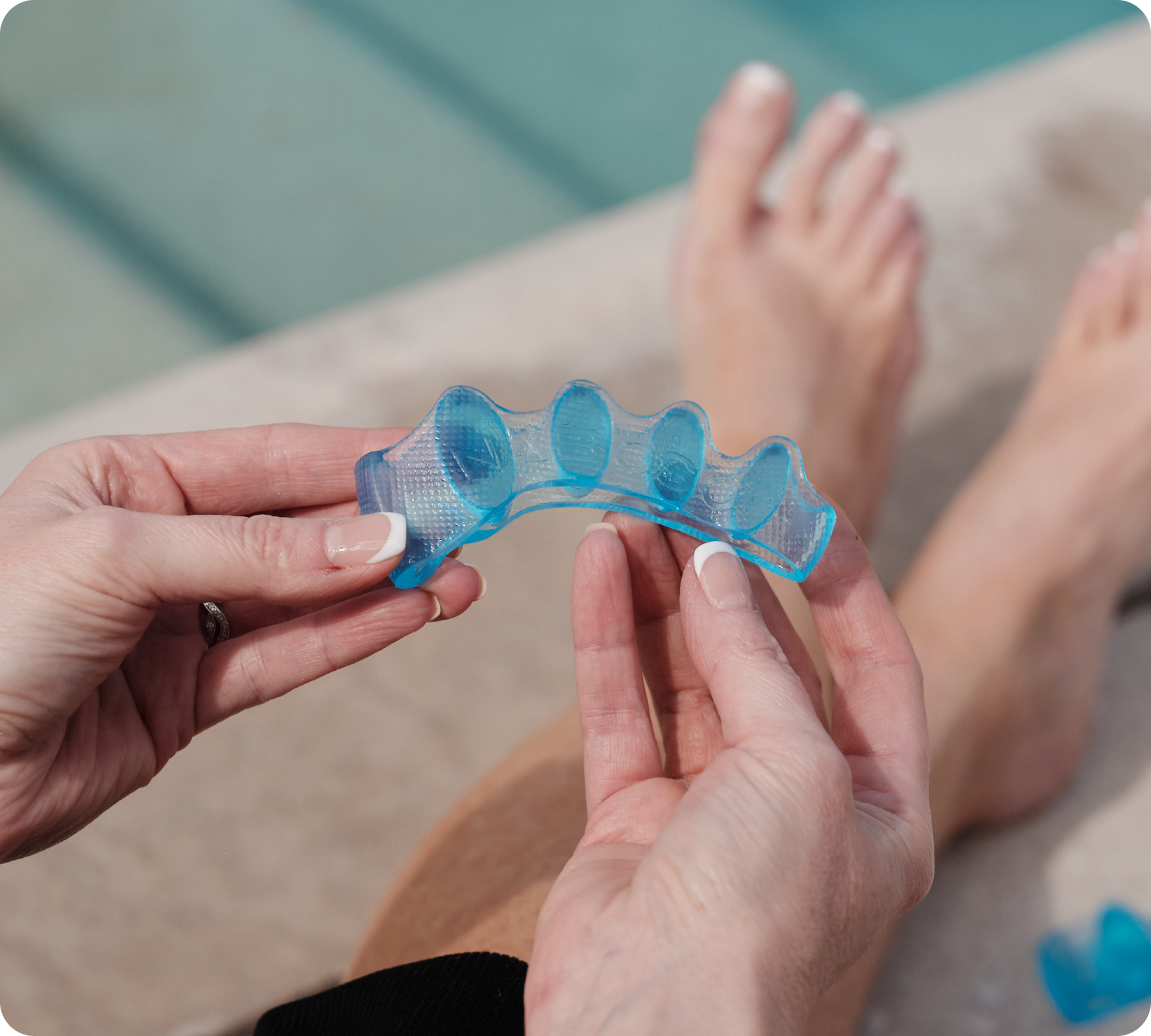
Tools such as toe spacers can help improve toe alignment and create a more stable muscular foundation. Wedges may also help individuals find proper loading mechanics during movement retraining.
Without proper alignment, many people compensate through gripping rather than true stabilization.
Short Foot Should Be Functional
One of the biggest mistakes I see is treating Short Foot like a stand-alone rehab exercise.
Short Foot should become part of movement.
Once activation is understood, it should integrate into:
- Squats
- Lunges
- Balance exercises
- Walking
- Step-ups
- Strength training
- Pilates and yoga
- Everyday standing posture
I often describe Short Foot as a “quick trigger” for stabilization — not a prolonged hold.
The goal is responsiveness, not rigidity.
Can Short Foot Fix Bunions?
This is one of the most common questions I receive.
The answer is:
No — you cannot structurally reverse a bunion without surgery.
However, you can:
- Improve muscular support
- Improve toe alignment
- Reduce progression
- Improve foot stability
- Improve loading mechanics
- Decrease compensatory movement patterns
For many people, improving intrinsic foot activation can significantly improve function and comfort.
More Is Not Better
Another important point - people can overdo Short Foot!
Excessive gripping and over-activation may actually irritate the plantar fascia and contribute to foot pain.
Remember - the goal is not tension.
The goal is integrated stability, sensory awareness, and efficient movement.
Final Thoughts
The future of foot rehabilitation is not just strengthening.
It is sensory-driven movement integration.
Short Foot is powerful not because it creates a “strong arch,” but because it reconnects the foot to the nervous system and restores the body’s ability to stabilize from the ground up.
When we improve sensory awareness through the feet, we improve how humans move, balance, and age.
Because movement begins with perception.

Leave a comment
This site is protected by hCaptcha and the hCaptcha Privacy Policy and Terms of Service apply.