
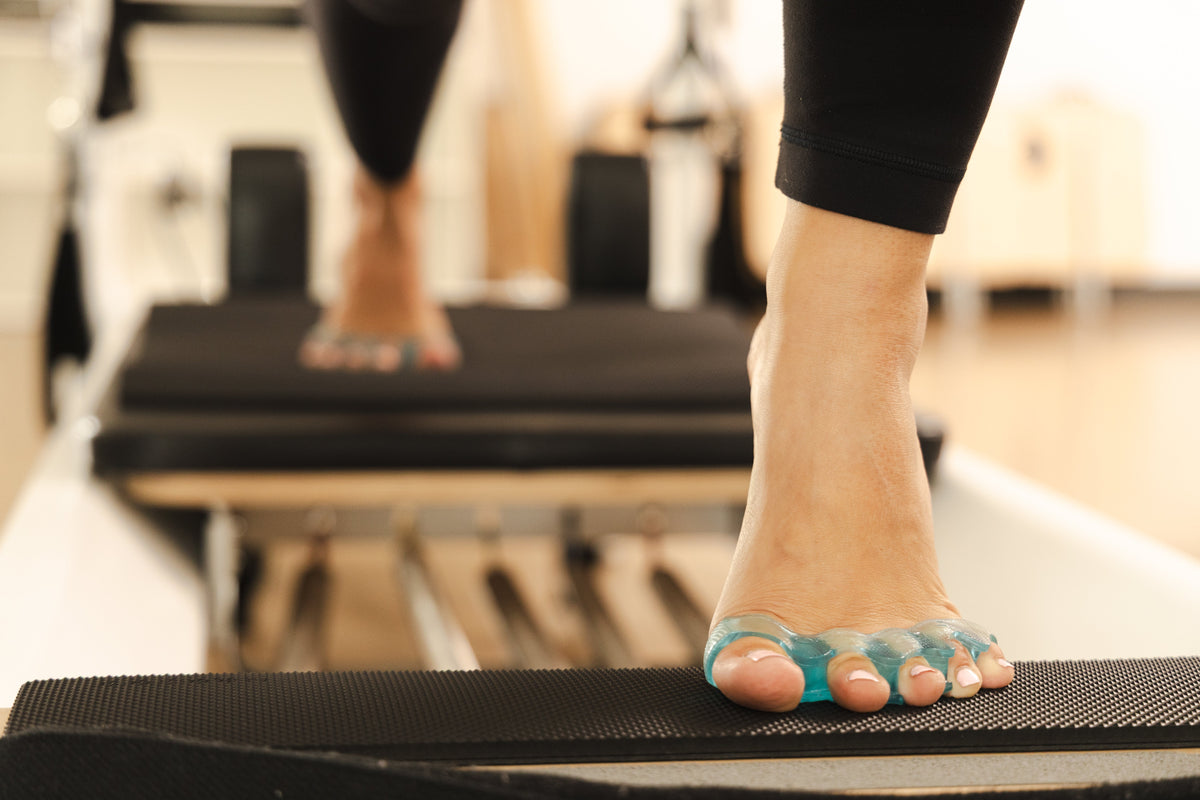
When was the last time you trained your toes?
We spend time strengthening our legs, improving our core stability, and working on our balance. Yet the muscles that help connect us to the ground often receive very little attention.
In a recent Naboso webinar, I explored the toe flexors: the muscles that help press the toes into the ground and support the foot as we move. Understanding these muscles can change how we approach foot strength, from a simple standing exercise to the final moments of a walking stride.
Your Toes Have a Job to Do
As you walk, your foot needs to adapt to the ground and then become firm enough to help you move forward. During push-off, the toes extend at their base joints as the heel rises. The toe flexors help maintain contact and resist that extension, contributing to a stable platform.
This is why I encourage you to think beyond simply curling your toes. Functional toe strength includes the ability to generate pressure while the toes remain long and connected to the surface beneath them.
Think of it as anchoring through your toes. They are part of the system that allows your foot to support and transfer force.
Toe Flexion and Ankle Plantar Flexion Are Different
Pointing your foot downward at the ankle is called plantar flexion. Pressing or bending your toes downward is toe flexion. These actions can happen together, but they are not interchangeable.
The gastrocnemius and soleus—the major calf muscles—are the primary drivers of ankle plantar flexion. Other muscles, including tibialis posterior, assist. Tibialis posterior also plays an important role in supporting the arch and controlling foot position.
The long toe flexors contribute to ankle plantar flexion, too, but their tendons continue into the toes. To train their toe function, we need to pay attention to what the toes themselves are doing.
Two Muscle Groups, One Connected Foot
Intrinsic muscles begin and end within the foot. These include muscles such as flexor digitorum brevis and flexor hallucis brevis. Working with other foot muscles and connective tissues, they help control the toes and contribute to the foot’s ability to stiffen when needed.
Extrinsic muscles begin in the lower leg and send tendons into the foot. Two key examples are flexor hallucis longus, which flexes the big toe, and flexor digitorum longus, which flexes the four smaller toes. Their tendons pass behind the inner ankle through the tarsal tunnel before reaching the foot.
These groups work together. Research shows that the plantar intrinsic muscles contribute to stiffening the front of the foot during push-off, helping us push against the ground when walking and running.[1]
Why Toe Strength Matters as We Age
Balance involves vision, the vestibular system, sensation, strength, and coordination. Toe strength is one part of that picture.
Research in older adults has found an association between weaker toe flexors and falls.[2] That does not mean toe exercises alone prevent falls. It does mean these small muscles deserve a place in a broader strength and balance program.
For me, movement longevity includes preserving the ability to interact with the ground: to sense it, respond to it, and generate force through it.
Three Ways to Begin Training Your Toe Flexors
1. Explore a Small Forward Lean
Stand near a counter for support, with your feet comfortably apart. Keep your heels grounded and gently shift your body forward from the ankles.
Notice the pressure moving toward the front of your feet. Let your toes participate without forcefully clawing or lifting your heels. Return to the starting position with control.
Keep the movement small. The goal is to explore how your foot responds to a changing balance demand.
2. Use Foot Wedges to Explore Position
In the webinar, I demonstrated Naboso Foot Wedges as a way to change the foot’s position during training.
Position matters because the ankle and toes influence the length and demands placed on the muscles crossing them. A wedge can help you explore those relationships, but its placement should match the exercise and your available mobility.
Follow the webinar demonstration for setup, use a stable support, and avoid forcing your toes or ankle into an uncomfortable position.
3. Add Resistance to the Big Toe
Standing, place a light resistance band so it gently resists your big toe pressing downward. Begin with your ankle comfortably neutral.
Slowly press the big toe down against the resistance, then control its return. Keep the movement at the toe rather than pointing your whole foot. Start with light resistance and a few controlled repetitions.
Neutral or slightly dorsiflexed ankle positions can be useful starting points for exploring toe work. There is no single position that is best for every exercise or every foot. Stop if you experience pain or cramping.
Bring Awareness Into Strength
At Naboso, I encourage people to connect sensation with movement. Before adding more resistance, notice where you feel pressure, whether your toes remain in contact, and whether you can control the movement.
Sensory awareness and strength are complementary. Feeling your feet can help you pay attention to how you move; progressively challenging the muscles is how you build their capacity.
Your toes may be small, but their contribution to movement deserves attention. Give them a place in your training—and bring that connection into your next step.
Explore the toe flexor webinar for the full anatomy discussion and exercise demonstrations, including Naboso Foot Wedges.
References
- Farris et al. The functional importance of human foot muscles for bipedal locomotion. https://pubmed.ncbi.nlm.nih.gov/30655349/
- Mickle et al. Toe weakness and deformity increase the risk of falls in older people. https://pubmed.ncbi.nlm.nih.gov/19751956/

Leave a comment
This site is protected by hCaptcha and the hCaptcha Privacy Policy and Terms of Service apply.