
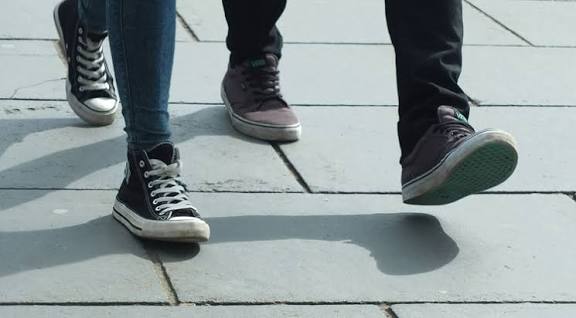
Walking is one of the most natural things we do, yet few people have ever been taught how to walk efficiently.
As a functional podiatrist and movement specialist, I've spent years studying what separates effortless movement from movement that feels heavy, inefficient, or painful. What I've learned is that walking is far more than putting one foot in front of the other. It is a dynamic exchange between gravity, sensation, fascia, and energy.
The most efficient walkers aren't necessarily the strongest. They're the ones who have learned how to work with their body's natural design.
Walking Is an Energy Transfer System
Many people think walking is primarily muscular. In reality, efficient walking is an energy-management strategy.
Every step begins with gravity.
As your foot contacts the ground, your body absorbs forces that can either be dissipated through excessive muscular effort or captured and recycled through the fascial system.
The difference determines whether movement feels effortless or exhausting.
The body's fascial network acts like a series of springs. With each step, it stores elastic energy and releases it to propel us forward. This allows us to move farther while expending less energy.
I often refer to this as the body's natural "2X effect."
Rather than creating force with every step, efficient movers learn how to capture energy, store it, and return it.
Why Fascia Matters
Fascia is the connective tissue network that links every muscle, bone, organ, and joint throughout the body.
But fascia is much more than connective tissue.
It is also one of the body's most important sensory systems.
Healthy fascia allows us to:
- Transfer force efficiently
- Maintain balance and stability
- Adapt to changing environments
- Move with fluidity and grace
- Reduce unnecessary muscular effort
When fascia loses elasticity or becomes restricted, movement becomes more expensive. The body compensates by relying on muscles to generate force that should have been transferred through elastic tissues.
This is often when fatigue, stiffness, and inefficiency begin to appear.
The Foot: Your First Point of Contact
Every step starts with the feet.
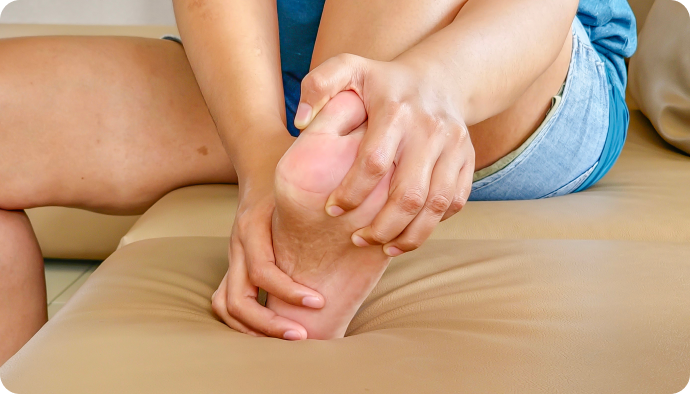
The soles of the feet contain thousands of sensory receptors that continuously provide information to the brain about the surface beneath us.
This sensory information helps regulate:
- Balance
- Posture
- Joint stability
- Force production
- Movement efficiency
The brain doesn't simply need movement—it needs sensation.
When sensory awareness from the feet is reduced, whether from injury, aging, neuropathy, or overly cushioned footwear, movement efficiency often declines.
That's why I often say:
Movement begins with perception.
The better you feel the ground, the better your brain can organize movement.
The Hidden Connection Between the Foot and Core
One of the most overlooked aspects of walking is the relationship between the foot, pelvis, and diaphragm.
Efficient gait depends on what I call the foot-to-core connection.
When the foot creates a stable foundation, the deep hip rotators, pelvic floor, and diaphragm can work together as an integrated system.
This creates:
- Improved balance
- Better energy transfer
- Enhanced stability
- Reduced compensations
Walking becomes less about muscular effort and more about whole-body coordination.
Movement Requires Spirality
Human walking is not linear.
It is rotational.
As one leg moves forward, the opposite arm swings. The pelvis rotates one direction while the thoracic spine rotates in the opposite direction.
This natural counter-rotation creates momentum and allows energy to move efficiently throughout the body.
When the pelvis or thoracic spine becomes restricted, walking loses its fluidity. The body often compensates with excessive muscular effort, reduced stride length, or altered movement patterns.
Efficient walking requires freedom of movement through these rotational systems.
Four Ways to Improve Your Walking Efficiency
1. Wake Up Your Feet
Healthy movement starts with healthy sensory input.
Use tools such as the Naboso Neuro Ball to stimulate the nerves in the feet and improve awareness of the ground beneath you. Check out our 2 minute foot activation.
2. Build Foot Stability
Practice short-foot exercises to strengthen the intrinsic muscles of the feet and improve arch control.
Remember, the goal isn't gripping with the toes—it's creating a stable and responsive foundation.
3. Prioritize Mobility
Walking requires mobility throughout the entire kinetic chain.
Pay special attention to:
- Big toe mobility
- Ankle mobility
- Pelvic mobility
- Thoracic spine rotation
These areas are essential for efficient gait mechanics. This is one of my favorite tspine and pelvis mobilizations.
4. Choose Footwear That Supports Sensation
Footwear influences how the brain perceives movement.
While there is no single shoe that's right for everyone, excessive cushioning can sometimes reduce the sensory feedback needed for efficient movement.
The goal is to find footwear that allows you to perceive the ground while supporting your individual movement needs.
Walking Speed: A Vital Sign for Longevity
One of the most fascinating findings in longevity research is that walking speed is strongly associated with health outcomes and lifespan.
In many ways, walking speed serves as a movement-based vital sign.
Why?
Because walking speed reflects the integration of multiple systems:
- Strength
- Balance
- Sensory function
- Cardiovascular health
- Coordination
- Energy transfer
When walking efficiency improves, movement becomes easier, more sustainable, and more resilient over time.
The Future of Movement Longevity
Walking is one of the most powerful tools we have for maintaining health throughout life.
But walking more is only part of the equation.
Learning how to walk efficiently—to work with gravity, leverage fascia, and optimize sensory awareness—may be one of the most overlooked strategies for preserving movement longevity.
The art of walking is not about effort.
It's about learning how to move with the body's natural design.
And when we do that, movement becomes easier, more efficient, and more sustainable for years to come.


Leave a comment
This site is protected by hCaptcha and the hCaptcha Privacy Policy and Terms of Service apply.