
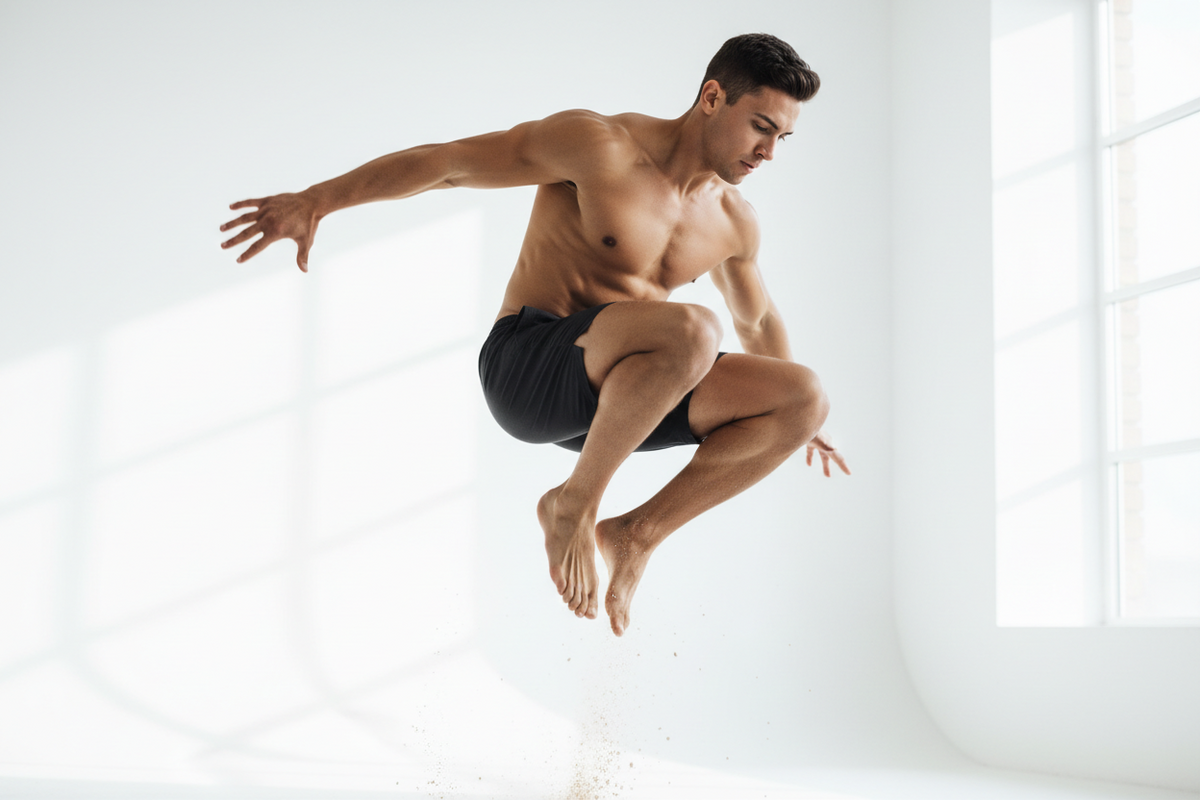
When most people think about a strong foot, they imagine a rigid, stable arch—one that holds its shape and resists collapsing under pressure.
But the human foot was not designed to remain rigid. It was designed to adapt, compress, recoil and respond.
This is what I call the athletic arch: a foot that is strong enough to stabilize the body, yet elastic enough to store and release energy during walking, running and athletic movement.
The Foot Is a Sensory Spring
The plantar fascia is often discussed only when it becomes painful. In reality, it is one of the body’s most important elastic structures.
Imagine the plantar fascia as a strong rubber band spanning the bottom of the foot. When the foot contacts the ground, the arch compresses and the plantar fascia lengthens. This stores potential energy. As the body moves forward, that energy is released to help propel us into the next step.
This compression-and-recoil cycle creates what is sometimes referred to as the catapult effect. Rather than relying entirely on muscular effort, the body captures and recycles elastic energy.
An athletic arch must therefore be capable of doing two seemingly opposite things:
- Yielding enough to absorb force
- Stiffening quickly enough to transfer force
The goal is not to prevent the arch from moving. The goal is to develop an arch that moves with control.
Metatarsal Splay Creates Stability
When the foot contacts the ground, the metatarsals should naturally spread or splay. This widens the base of support and allows the foot to adapt to the surface beneath it.
Metatarsal splay is an essential part of loading the plantar fascia and preparing the arch to store energy. If the toes are compressed or the forefoot cannot expand, the foot may lose some of its ability to distribute pressure and create dynamic stability.
This is one reason toe alignment matters. Toe spacers can be used during selected exercises to help restore more neutral alignment, encourage natural splay and improve awareness of the forefoot.
The objective is not simply to make the toes look straighter. It is to give the foot a better foundation from which to stabilize, load and propel the body.
The Windlass Mechanism Prepares the Foot for Propulsion
As the heel lifts and the big toe extends, the plantar fascia winds around the head of the first metatarsal. This is known as the windlass mechanism.
The windlass mechanism elevates the arch and helps transform the foot from a mobile adaptor into a more rigid lever. This stiffness allows force to move efficiently through the foot as the body pushes away from the ground.
A healthy foot does not remain mobile throughout the entire gait cycle. It moves through a sequence:
- It adapts to the ground.
- The arch compresses and stores energy.
- The foot stiffens.
- Stored energy is released during propulsion.
This precise timing is what makes the foot both resilient and efficient.
Running Requires Dynamic Stiffness
Running exposes the body to substantial ground-reaction forces. Managing these forces requires more than strong muscles. It requires the foot and ankle complex to create the appropriate amount of stiffness at exactly the right time.
I refer to this as dynamic stiffness.
Too little stiffness can reduce the body’s ability to transfer force efficiently. Too much stiffness can limit shock absorption and increase the stress placed on other tissues. Athletic movement requires the nervous system to continuously adjust stiffness based on speed, surface, footwear and anticipated impact.
This brings us to an important distinction: the body should not simply react to the ground. It should anticipate it.
Before the foot even makes contact, the nervous system prepares the muscles and connective tissue for the expected impact. The faster or more demanding the movement, the more important this feed-forward preparation becomes.
Performance is not only about how strongly we respond after impact. It is also about how intelligently the body prepares before impact occurs.
Short Foot: Building the Foundation of the Athletic Arch
One of my foundational exercises for foot strength is the short foot exercise.
Short foot activates the intrinsic muscles of the foot, particularly the abductor hallucis. Instead of curling or gripping the toes, you gently draw the ball of the big toe toward the heel, creating a subtle lift through the arch.
The toes should remain long and relaxed.
This exercise helps create what I describe as foot-to-core sequencing. When the deep muscles of the foot activate, they contribute to a chain of stabilization that travels upward through the lower leg, pelvis and core.
To perform short foot:
- Place the foot flat on the ground.
- Maintain contact through the heel, base of the big toe and base of the little toe.
- Keep the toes relaxed.
- Gently draw the ball of the big toe toward the heel.
- Hold the contraction without curling the toes or lifting the foot.
Begin seated or standing, then progress the exercise into single-leg balance, squats, lunges and athletic movement.
Alignment Changes Muscle Activation
A muscle cannot produce optimal force if the joint it controls begins from a compromised position.
Foot wedges can help place the foot into a more neutral position during training. This can improve sensory awareness and give the intrinsic foot muscles a better opportunity to activate.
Similarly, toe spacers may help create space through the forefoot and support more effective metatarsal splay.
These tools should not replace strength or movement. They should help create the alignment and sensory input necessary to make training more precise.
Your Training Surface Matters
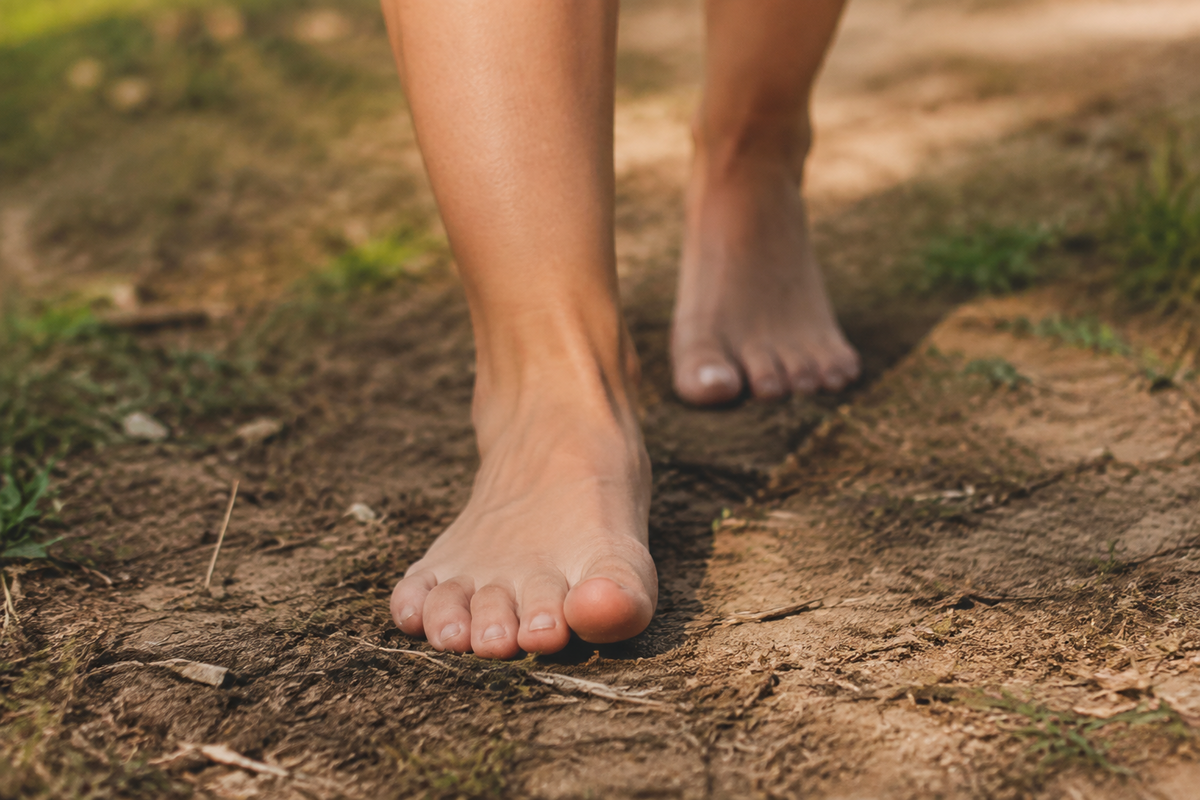
The nervous system is constantly gathering information from the ground. Surface firmness, texture and predictability all influence how the body prepares for impact.
Training on natural and appropriately firm surfaces can help the body become more aware of pressure, vibration and changes beneath the feet. This sensory information contributes to balance, timing and movement efficiency.
However, surface exposure should always be progressive. If you have spent years training exclusively in highly cushioned shoes or on soft surfaces, your tissues need time to adapt.
The goal is not to seek the hardest surface possible. It is to gradually expand the body’s capacity to sense and respond to different environments.
Train the Arch to Adapt, Store and Release
The athletic arch is not defined by its height or appearance. It is defined by its function.
A functional arch can:
- Sense the ground
- Allow controlled metatarsal splay
- Compress under load
- Store elastic energy
- Create dynamic stiffness
- Recoil during propulsion
- Coordinate with the rest of the body
Foot strength is not simply about holding the arch higher. It is about developing a foot that knows when to yield, when to stabilize and when to release energy.
When we train the sensory and mechanical functions of the foot together, we create a more responsive foundation for movement, performance and longevity.
Because the strongest foot is not always the most rigid foot.
It is the foot that can adapt—and then rise.


Leave a comment
This site is protected by hCaptcha and the hCaptcha Privacy Policy and Terms of Service apply.